




Bee Removal in the North West
NOTICE
We would always encourage you to live with bees and while we are happy to re-locate swarms of honey bees outside the nest, please note that on ethical grounds Pest Professionals will not attempt eradication of honey bees under any circumstances. If you have a honey bee colony in an inaccessible place such as a chimney, we can put you in touch with a specialist relocation service who will discuss the options with you – just email enquiries@pestprofessionals.co.uk . We will also only ever consider eradication of bumble bees as an absolute last resort in rare situations such as where life can be demonstrated to be in danger or if important work cannot be completed without action being taken, and we will always look at relocation first.
Please LIVE WITH BEES IF YOU CAN.
If you have an issue with bees or a worrying bees nest at your property or workplace the Pest Professionals in the North West can help. We provide you with immediate service in two very effective stages:
 CALL 0800 275 1000 TO TALK TO A QUALIFIED PEST CONTROLLER
 We will help you to assess your problem and give you immediate, honest and FREE advice … without obligation
 IF NEEDED, WE ORGANISE A VISIT or ON-SITE SURVEY FOR YOU
Your local Pest Professional will come round to sort the problem out swiftly and without any fuss
The no obligation telephone consultation service applies to both residential and business customers in the North West area. No bee problem or bees nest removal job is too large or too small for us to consider. Where relevant we have the ability to advise on any urgent action needed to protect your health, property or possessions prior to a visit. If a visit is called for we let you know if there will be a call out fee and also advise on the probable costs of any bee removal should it be called for.
Bee Friendly Pest Control
Bees form complex social colonies with a solitary fertile queen and are an extremely important pollinator. As such our first concern as pest controllers when bee’s nest removal is required is to keep the bee hive alive and intact.
The key is to locate an experienced beekeeper who will accept the bee hive and maintain it, and we can usually assist in this process.
Worker bees form the considerable bulk of the colony and their numbers can make it to over 30,000 in the height of the season. Some workers remain with the queen to tend her, nourish the larvae, produce honey, produce new wax honeycombs for the larvae and defend the nest. More mature workers go out from the nest in the search for sources of nectar and pollen. The queen may lay a million eggs in her lifetime.
Bees are generally not considereded pests and (unless provoked) will not attack you. The sting of worker bees is barbed and can not be retracted, and holds a poison sac which continues to pump venom.
A small minority of people are hyper allergic to this venom and if a hive is in close proximity to people, for example, close to your house, or even in it (chimneys being a prime candidate), action may be required to relocate it. This must only ever be attempted by an experienced pest controller or bee keeper, each of whom will wear special protective clothing.
Eradication is very much a last option for a pest controller, and will depend on his ability to remove the honeycomb and/or seal the nest shortly after the main task is done. There is a significant danger of secondary poisoning if robber bees gain access to a previously poisoned nest and bring the insecticide back to their home colony.
How To Discriminate Between Bees and Wasps
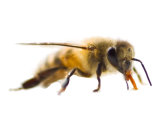
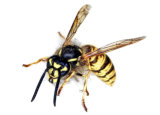
Both bees and wasps are members of the Hymenoptera order of insects, but they can be easily distinguished from each other. Honey bees are normally dark brown, with a pale orange/amber band and, importantly, they are hairy. Wasps possess bright yellow and black stripes and have a constricted waist and smooth skin.
If you need sound advice or a rapid solution to bee problem or a bees nest removal anywhere in North West or the surrounding towns and villages – get in touch.